

Why Creative Play Is Essential for Early Childhood Development
Childhood is one of the most important stages of human development. During early years, children rapidly develop cognitive abilities, emotional intelligence, social skills, creativity, and physical coordination. The experiences children have during this stage strongly influence how they learn, think, communicate, and interact with the world around them.
One of the most powerful tools for healthy development is play.
Play is much more than entertainment for children. It is a natural learning process through which kids explore ideas, solve problems, express emotions, and build confidence. Through play, children develop important life skills in ways that feel enjoyable and effortless.
In today’s digital age, many parents are becoming concerned about excessive screen time and reduced physical interaction. As a result, creative and screen-free play is becoming more important than ever.
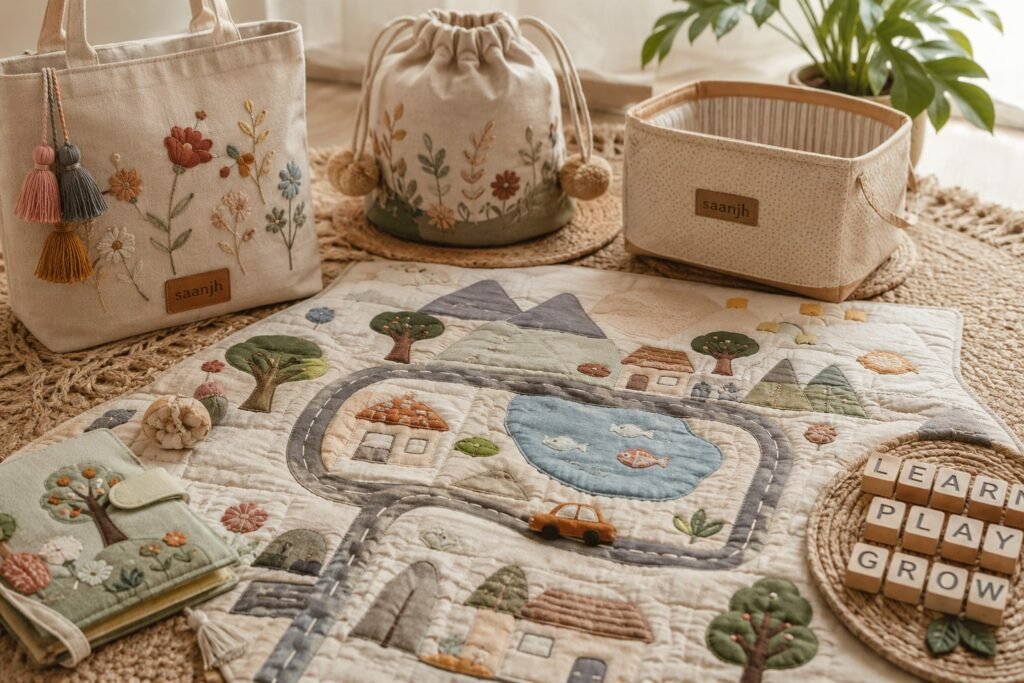
At Saanjh Crafts, handmade educational products are thoughtfully designed to support meaningful childhood experiences through creativity, imagination, and interactive learning.
What Is Creative Play?
Creative play refers to activities that allow children to use imagination, storytelling, curiosity, and self-expression. Unlike structured tasks with fixed outcomes, creative play encourages open-ended exploration.
During creative play, children invent scenarios, experiment with ideas, and interact freely with their environment.
Examples of creative play include:
- Pretend play
- Storytelling
- Role-playing
- Building activities
- Sensory exploration
- Interactive learning games
Creative play gives children freedom to think independently and create their own learning experiences.
This kind of play strengthens both imagination and confidence.
Why Play Is Essential for Child Development
Children do not learn only through formal teaching. Much of early learning happens through play and exploration.
Play helps children develop:
- Problem-solving abilities
- Communication skills
- Creativity
- Emotional awareness
- Social interaction
- Motor coordination
When children play, they constantly make decisions, observe outcomes, and adapt their behavior.
For example, during imaginative play, a child may create stories, solve pretend problems, and communicate ideas—all of which build cognitive and emotional strength.
This is why child development experts strongly emphasize learning through play.
Creative Play Improves Brain Development
Early childhood is a period of rapid brain development. Every new experience helps strengthen neural connections that support future learning.
Creative play stimulates multiple areas of the brain at once.
It helps children develop:
- Memory
- Focus
- Decision-making
- Pattern recognition
- Language processing
- Critical thinking
When children engage in creative activities, their brains actively process information instead of passively consuming entertainment.
This active engagement makes learning more effective and long-lasting.
The more opportunities children have for meaningful play, the stronger their developmental foundation becomes.
Screen-Free Play Builds Stronger Learning Habits
Modern children are surrounded by screens—phones, tablets, TVs, and digital devices. While technology can be useful, excessive screen exposure can limit creativity and reduce active engagement.
Screen-free play offers healthier alternatives by encouraging children to:
- Move physically
- Think independently
- Interact socially
- Explore creatively
- Learn actively
Children become creators instead of passive viewers.
This is why many parents are intentionally introducing more screen-free learning activities at home.
At Saanjh Crafts, educational play products help create engaging learning experiences without relying on screens.
Sensory Play Helps Children Learn Better
Sensory play involves activities that engage a child’s senses such as touch, sight, movement, and spatial awareness.
This type of play helps children understand the world more naturally through direct experience.
Sensory learning improves:
- Concentration
- Fine motor skills
- Coordination
- Emotional regulation
- Curiosity
- Cognitive development
When children interact with textures, shapes, movement, and visual elements, learning becomes more immersive and meaningful.
Educational playmats are especially useful for sensory learning because they combine movement, visual storytelling, and tactile interaction in one activity.
This makes learning fun while supporting important developmental milestones.
Creative Play Builds Emotional Confidence
Play is also essential for emotional growth.
Children often use play to process feelings, explore emotions, and understand social relationships. Through storytelling and pretend scenarios, they learn how to communicate and express themselves.
Creative play helps children develop:
- Self-confidence
- Emotional awareness
- Patience
- Communication
- Resilience
When children are free to explore and make decisions during play, they develop stronger self-belief and independence.
This confidence often carries into other areas such as learning, social interaction, and problem-solving.
Parents who encourage creative play often notice children becoming more expressive and emotionally secure.
Educational Playmats Encourage Independent Learning
One major benefit of interactive learning products is that they encourage children to learn independently.
Educational playmats create environments where children can:
- Explore freely
- Build stories
- Solve small challenges
- Practice communication
- Develop imagination
Instead of waiting for instructions, children become active learners.
Independent learning helps build:
- Curiosity
- Initiative
- Confidence
- Creativity
- Decision-making
At Saanjh Crafts, educational playmats are designed to support open-ended learning where children can learn naturally through imagination and interaction.
Why Handmade Learning Products Feel More Meaningful
Handmade educational products offer something special that many factory-made toys cannot.
They feel:
- Warm
- Personal
- Creative
- Interactive
- Emotionally engaging
Handcrafted learning products often create stronger emotional connection because they reflect visible care and thoughtful design.
Unlike mass-produced plastic toys, handmade products encourage slower, more intentional interaction.
Parents increasingly prefer artisan educational products because they align with values such as:
- Meaningful learning
- Sustainability
- Creativity
- Quality
- Emotional development
At Saanjh Crafts, every educational product is designed with child-friendly creativity and artisan craftsmanship.
Why Parents Are Choosing Mindful Play
Modern parenting is shifting toward more intentional child development.
Parents increasingly want products and activities that help children grow in healthy and meaningful ways.
Mindful play focuses on:
- Learning through exploration
- Emotional connection
- Reduced screen dependency
- Creative independence
- Healthy development
Instead of filling time with passive entertainment, many parents now prioritize activities that support long-term growth.
Creative play is one of the best investments parents can make in childhood development
The Future of Learning Through Play
The future of childhood learning is moving toward creativity, interaction, and meaningful engagement.
Experts increasingly recognize that children learn best when they:
- Explore actively
- Think independently
- Create freely
- Move physically
- Engage emotionally
Creative play supports all of these developmental needs.
As awareness around child development continues growing, screen-free and interactive learning tools will become even more valuable.
Educational play is not simply about keeping children busy.
It is about helping them grow into curious, confident, creative individuals.
Conclusion
Creative play is essential for early childhood development because it supports learning, imagination, emotional growth, communication, and independent thinking. Through play, children naturally develop important life skills that shape how they learn and interact with the world.
In today’s digital environment, screen-free learning has become more important than ever. Activities such as sensory play, storytelling, and educational play encourage healthier and more meaningful childhood experiences.
At Saanjh Crafts, handmade educational products are thoughtfully designed to help children learn, imagine, and grow through joyful creative play.
Why is creative play important for children?
Creative play helps children develop imagination, problem-solving skills, communication abilities, and emotional confidence.
How does play support child development?
Play supports cognitive, emotional, social, and physical development by helping children actively explore and learn.
What is screen-free learning?
Screen-free learning involves educational activities that do not rely on digital devices and instead encourage active participation and creativity.
What is sensory play?
Sensory play includes activities that engage a child’s senses such as touch, movement, sight, and interaction with textures and objects.
Are educational playmats good for kids?
Yes. Educational playmats support creativity, sensory learning, communication, and independent exploration.
Where can I buy educational play products online?
You can explore handmade educational playmats and creative learning products at Saanjh Crafts online store.